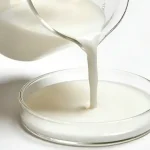
Some surfaces are inherently more difficult to wet than others. When applying paints, inks, adhesives, or agricultural formulations, poor wetting can lead to issues such as fish-eyes, retraction, pinholes, or uneven coverage.
Wetting agents enable your products to spread more easily and achieve better contact with the substrate, thereby improving wetting performance and enhancing the final application results.

Working Principle of Wetting Agent
Wetting is a typical physicochemical interface process. In simple terms, it is the process of replacing the air attached to a solid surface with a liquid.
Surface Tension and Interfacial Tension
When you face PE/PP/PET plastic, TPO, rubber, waxy plant leaves, or metal surfaces with anti-rust oils, the surface energy of these substrates is usually very low (below 30 mN/m). If the surface tension of your aqueous system is high (up to 72.8mN/m for pure water), the liquid will accumulate into beads due to the contraction force and cannot infiltrate the substrate. The core mission of a wetting agent is to rapidly reduce the surface tension of the liquid below the surface energy of the substrate.
Molecular Orientation and Thermodynamic Drive
Wetting agent molecules have both a hydrophilic head group and a hydrophobic/lipophilic tail chain. When you add a wetting agent to the product, these amphiphilic molecules will migrate to the liquid-gas interface and liquid-solid interface at an extremely high rate, orienting the hydrophobic end toward the substrate or air. The hydrophilic end toward the water phase, thus drastically reducing the interfacial resistance between the phases and allowing the liquid to smoothly “climb” on the solid surface.

Breakdown of Core Chemical Composition: Classification and Performance Characteristics of Mainstream Wetting Agents
In order to meet the diverse needs of industry for dynamic wetting, static surface tension reduction, low foaming, and acid and alkali resistance, a variety of chemical types of industrial wetting agents have been developed:
Polyether Polysiloxane Copolymers
Polyether-modified silicones can provide very strong surface tension reduction and are widely used when difficult-to-wet substrates require rapid spreading.
By chemically modifying the siloxane backbone with a hydrophilic polyether-chain segment, highly efficient polyether-modified silicone wetting agents can reduce the surface tension of aqueous formulations to around 20–22 mN/m under specific test conditions. It is very suitable for the treatment of low surface energy substrates that are extremely difficult to wet, and it can also provide a good leveling effect in your product.
Branched Alcohol Ethoxylates/Iso-C8/C10 Alcohol Ethoxylates
This class of specialty nonionic surfactants combines the branched alcohol ethoxylates with the high wettability of ether chains. Their moderate molecular weight, high branching ability, and rapid migration to the newly generated dynamic interface within a few milliseconds result in a significant drop in dynamic surface tension, and their inherently excellent low/bubble resistance properties make them ideal for high-speed construction conditions.
Acetylenic Diols & Ethoxylates
Acetylenic Diols belong to the two-head and two-tail structure of the parent surfactant. This unique symmetrical molecular structure makes it both efficient for wetting and dynamic defoaming. It reduces the dynamic surface tension and does not introduce foam at all. It is a high-end choice for high-demand water-based coatings and inks.
Anionic Wetting Penetrant
Anionic wetting agents are ionized in the aqueous phase and have extremely strong static surface tension drops and rapid penetration. They are outstanding in pesticide emulsions, textile printing and dyeing, and strong permeability cleaning agents, but they need to pay attention to compatibility in high-electrolyte or cation systems.
Other Nonionic Surfactants
Including fatty alcohol polyoxyethylene ether (AEO), alkylphenol polyoxyethylene ether substitute (APEO-free), etc. Nonionic surfactants generally offer broader tolerance to hard water and electrolytes than many ionic surfactants, have a wide pH range, and have excellent chemical stability. They have the widest spectrum of basic wetting and dispersion stabilizers in industrial formulations.
In-Depth Application Scenarios and Recipe Combat Guide
Waterborne Industrial Paint, Wood Paint, and Plastic Paint

Water-based coatings on PP, PET, TPO, and oil-contaminated metal parts are prone to cratering, crawling, and edge retraction, and adhesion after curing is not good.
Formulation Considerations:
Main wetting agent: 0.1%-0.5% polyether siloxane copolymer (strong surface tension reduction, instant elimination of shrinkage pores, to ensure uniform and smooth film).
Compound scheme (high-speed spraying): add 0.2%-0.3% Iso-alcohol ethoxylates; they are low-foaming wetting agents (reduce dynamic surface tension and prevent microbubbles and edge contraction during atomization spraying).
Order of addition: It is recommended that you add it in the post-addition stage and stir well at medium speed.
Printing Ink and Water-based Adhesive
High-speed flexo and gravure printing (speeds up to 200-500m/min) require ink to infiltrate the plate and plastic film within a few milliseconds. At the same time, adhesive in release paper or BOPP film coating is prone to lack of glue and drawing.
Formulation Considerations:
Main wetting agent: 0.3% – 0.8% acetylenic diols-modified wetting agent or acetylenic diols (high dynamic response, rapid reduction of dynamic surface tension).
Compound scheme: If it is used for hard-wetting plastic film (such as PE/PET without corona treatment), it can be compounded with 0.1%-0.2% polyether siloxane copolymer to assist spreading.
Processing Guidelines: If your product crystallizes at low temperatures, dissolve it before adding it. Keep the silicon content in water-based adhesives below 0.15% to avoid abnormal peel strength.
Pesticide Suspension (SC) and Dispersible Oil Suspension (OD)
The surface of plant leaves is mostly covered with a dense waxy layer (such as kale and wheat leaves), which is easy to bounce off after spraying. At the same time, it is necessary to ensure the long-term suspension of the high-concentration powder in the water phase.
Formulation Considerations:
Wetting penetrant: 1.0%-3.0% penetrant nonionic surfactant or iso-alcohol ethoxylates (significantly reduces the contact angle of the solution and improves spreading and retention on hydrophobic leaf surfaces).
Wetting dispersant (sanding stage): You can compound 1.5%-2.5% polycarboxylate dispersant to ensure that the active ingredient particles are ground, wetted, and have steric stability.
Wetting agents primarily help the formulation contact and spread over the hydrophobic leaf surface, while dispersants stabilize suspended active-ingredient particles and help prevent aggregation.
Process guide: Wetting permeants are usually added at the end of preparation to avoid excessive foaming during high-shear sanding.
Industrial Cleaning Agents and Metal Working Fluids
Industrial spray cleaning requires that the cleaning solution can penetrate the hard oil scale and, at the same time, can not produce a lot of foam under the strong spray shear. Metal cutting fluids need to quickly wet the contact surface between the tool and the workpiece to provide cooling lubrication.
Formulation Considerations:
Industrial spray cleaning agent: 0.5%-2.0% low-foaming Iso-alcohol ethoxylates wetting agent + 1.0% special nonionic surfactant (such as polyether-modified alcohol) (taking into account high permeability, peeling power, and antifoaming/antifoaming characteristics; no foaming under high-pressure spray).
Water-based metal cutting fluid/semi-synthetic fluid: 0.2%-0.5% high turbidity point nonionic wetting agent (excellent hard water stability and anti-rust compatibility, fast wetting of tool and workpiece contact surface).
Process guide: pay attention to the pH value of your formulation (usually in the strong alkali environment of pH 8-11), and select the chemical structure with high hydrolysis stability.
Systematic Selection Guide for Wetting Agents
In the actual formulation development and evaluation, you can refer to the following selection guide to quickly match the chemical composition:
| Application | Problem | What to Look For | Suitable Types |
| Waterborne coatings | Poor wetting, cratering, or crawling on the substrate | Good substrate wetting and compatibility | Polyether-modified silicones or non-silicone wetting agents |
| Plastic coatings | The coating crawls on PE, PP, or TPO | Strong spreading and low dynamic surface tension | Silicone-based or fast-acting wetting agents |
| Printing inks | Ink does not wet the film quickly enough at high printing speeds. | Fast dynamic wetting and low foam | Acetylenic diols or specialty nonionic surfactants |
| Water-based adhesives | Uneven coating, pinholes, or poor spreading | Fast wetting without affecting adhesion | Non-silicone wetting agents or compatible modified silicones |
| Agricultural formulations | Spray droplets remain on waxy leaves | Spreading, penetration, and retention | Nonionic surfactants or specialty penetrants |
| Industrial cleaners | Poor penetration into oily or dirty surfaces | Fast wetting and low foam | Low-foaming nonionic wetting agents |
| Metalworking fluids | Poor coverage or excessive foam during processing | Wetting, foam control, and formulation stability | Specialty nonionic wetting agents |
FAQ About Wetting Agents
What Is the Essential Difference Between a Wetting Agent and Leveling Agent?
The wetting agent acts on the liquid-solid interface to solve the problem of “spreading out”; the leveling agent acts on the liquid-gas interface to solve the “uneven” problem.
What Is the Difference Between Static and Dynamic Surface Tension?
Static surface tension reflects near-equilibrium conditions, while dynamic surface tension reflects newly formed interfaces. Dynamic surface tension is especially important in high-speed coating and printing.
Why Is the Wetting Agent With Low Static Surface Tension Not Effective in High-Speed Construction?
Because static refers to equilibrium, in high-speed construction, the new interface is formed in a few milliseconds; wetting agents with large molecular weight or slow migration can not run past and must choose the migration of very fast Iso-alcohol ethoxylates.
Is the More Wetting Agent Added, the Better the Effect?
No. The usage is usually as low as 0.1%-1.0%. Excess will lead to increased foaming, decreased water resistance of the coating, and even loss of recoating adhesion.
How to Solve the Problem of a Large Amount of Foaming Caused By the Use of a Wetting Agent?
Use acetylenic diols or alkynyl diol wetting agents with low foaming/foaming inhibition properties, or a small amount of defoaming agents can be combined.
Why Are Water-Based Systems Much More Dependent on Wetting Agents Than Oil-Based Systems?
The surface tension of pure water is as high as 72.8mN/m, while the solvent’s is only 20-30mN/m. Water-based paint without a wetting agent is difficult to spread on industrial substrates.
How to Scientifically Evaluate Wetting Agent Performance in the Laboratory?
The spreading effect is usually measured by a contact Angle meter; dynamic surface tension is measured by the maximum bubble pressure method, or shrinkage and leveling are observed by the scraper test.
Final Thought
Although the industrial wetting agent is a trace additive in the formula, it indirectly affects the construction experience and final performance of the product.
As a professional industrial wetting agent supplier, Celotech Ruico is committed to providing global customers with high-performance, environmentally friendly, and cost-effective wetting agent products and formulation support to help your products stand out in the competitive market.

Reference Sources
- Adamson, A. W., & Gast, A. P. (1997). Physical Chemistry of Surfaces (6th ed.). Wiley-Interscience.
- Rosen, M. J., & Kunjappu, J. T. (2012). Surfactants and Interfacial Phenomena (4th ed.). John Wiley & Sons.
- Bieleman, J. (Ed.). (2000). Additives for Coatings. Wiley-VCH.