During the production and construction process of floor finishing, problems such as blistering, pinholes, or uneven leveling may occur. To solve these issues, choosing the appropriate functional additives is of vital importance—of course, the specific selection also depends on the type of resin used and the construction substrate.
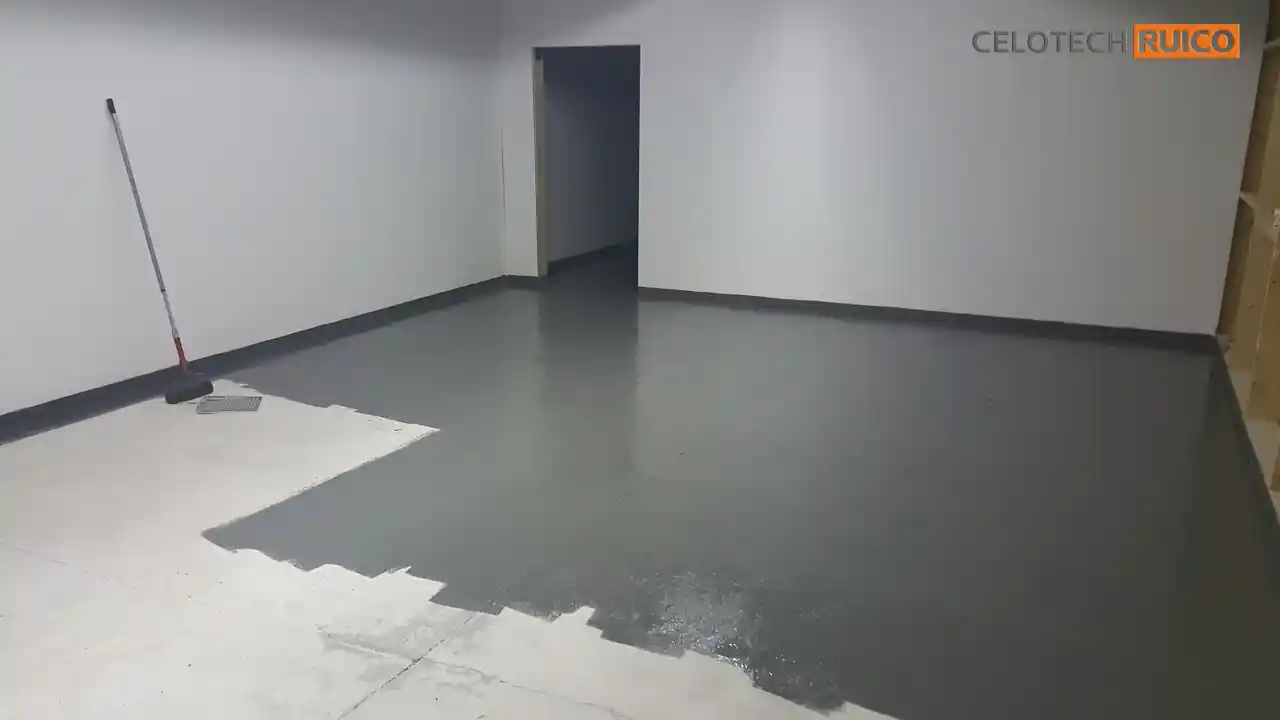
What are Floor Finishing Additives?
Floor finishing additives are functional chemicals added to a formulation in small amounts. They are not the main binder or structural component, but they can significantly influence production efficiency, application properties, and the final performance of the finished floor system.
For example, the resin itself may not be the problem, but it can blister during production, and pinholes may appear after construction. Or the coating may not spread well on the concrete surface and may shrink and develop orange peel; or the viscosity may be off, making it easy to hang during construction. In these cases, the right additive can often improve formulation performance.
What are the Common Floor Finishing Additives?
Different additives solve different problems. Common types can be easily divided into the following categories:
| Additive | Main Function |
| Defoamer | Controls foam and entrained air |
| Dispersant | Improves pigment and filler dispersion stability |
| Wetting Agent | Improves substrate or pigment wetting and spreading |
| Leveling Agent | Improves leveling and surface smoothness |
| Thickener | Adjusts coating viscosity |
| Rheology Modifier | Controls flow behaviour and sag resistance |
| Adhesion Promoter | Improves adhesion between the coating and substrate |
| Surface Modifier | Adjusts surface properties and appearance |
| Matting Agent | Reduces gloss and creates a matte finish |
| Slip/Anti-slip Additive | Adjusts surface friction |
| Coalescing Agent | Supports continuous film formation in water-based coatings |
| Preservative / Biocide | Helps protect water-based formulations from microbial contamination |
| Water Repellent | Helps reduce water absorption in suitable systems |
| UV Stabilizer | Helps improve the coating’s resistance to UV exposure |
Note: Not all of the aforementioned additives are required for every formulation; combinations vary depending on the specific formulation.
What Common Problems Can Floor Finish Additives Solve?
Additive names can feel abstract when used to describe a product. In practice, it is easier to choose the right additives based on the problems that occur in the formula.
Foam, Bubbles, and Pinholes
Whether during high-speed factory dispersion or on-site pumping and troweling, the entrapment of air within the flooring system is inevitable; combined with outgassing from the concrete substrate itself, pinholes and air bubbles are among the most common challenges formulators face. This is where defoamers play a critical role.
This is where defoamers come into play. However, since the fundamental mechanism of a defoamer is to disrupt surface tension, poor compatibility with the resin—or an excessive dosage—can easily lead to defects such as fish-eyes (craters) and edge retraction. Therefore, selecting a defoamer requires looking beyond mere defoaming speed; one must strike the right balance between defoaming efficiency and the surface tension dynamics of film formation.
Poor Dispersion of Pigments or Fillers
In the formulation of floor finishes, pigments and a large amount of mineral fillers are added to provide colour and covering power while increasing the coating thickness, improving the wear resistance, and helping to control the formulation cost. If they cannot be evenly dispersed during production, it may affect the colour, storage stability, and the final surface effect. Using dispersants can help the pigments and fillers disperse more evenly.
Substrate Wetting Is Not Good
Concrete is a common substrate for flooring finishing; it is porous and highly absorbent, with significant variations in surface tension. If the coating lacks sufficient wettability, issues such as inhibited spreading, fish-eyes (craters), and localised bare spots caused by excessive absorption into the substrate can occur.
Wetting agents can significantly reduce the dynamic surface tension of the coating and enhance the film’s ability to penetrate and spread across the concrete’s capillary pores, thereby eliminating potential defects—such as fish eyes, edge retraction, and uneven coverage—at the source.
Poor Leveling and Orange Peel
Floor finishing usually requires a flat surface. If the paint does not flow and spread sufficiently before drying, surface problems such as orange peel, roller marks, and shrinkage holes may occur.
A leveling agent can help the wet film flow and spread better, making the coated surface more uniform.
However, the leveling problem is not necessarily caused entirely by the leveling agent. Viscosity, surface tension, construction method, drying speed, and other factors will also have an impact. Therefore, adjust the leveling agent in conjunction with the overall formulation.
The Viscosity Is Too Low, or the Construction Control Is Not Good
If the viscosity of a flooring finish is too low, the coating may be prone to sagging; conversely, if your formula’s viscosity is too high, application and leveling may be adversely affected. Therefore, it is necessary to determine an optimal viscosity range. Thickeners and rheology modifiers can effectively adjust the coating’s viscosity and rheological behaviour.
For water-based flooring coatings, products such as acrylic thickeners or polyurethane (PU) associative thickeners can be selected based on the resin system and target performance requirements.
How to Choose Additives for Different Floor Finishing Types?
Different floor paint types require different additives.
Waterborne Acrylic Floor Finishing
Common additives in water-based acrylic floor finishing include:
- Antifoaming agent
- Dispersing agents
- Wetting agent
- Leveling agent
- Acrylic thickener
- PU associative thickener
- Other rheology modifiers
In the formulation of water-based acrylic floor finishing, factors such as foaming, wetting, viscosity, and film formation often need to be considered simultaneously to produce a high-quality product.
Waterborne polyurethane floor finishing
To ensure the quality of application and film formation, water-based polyurethane (PU) flooring systems typically require the use of defoamers, wetting agents, leveling agents, and rheology modifiers.
Among these, polyurethane associative thickeners (HEUR) are commonly used for rheology control. Although they share the same polyurethane chemistry as the base resin, their primary function is to precisely regulate application viscosity and rheological behaviour, ensuring smooth spreading during application while effectively preventing sagging after the coating is applied.

Epoxy Floor Finishes
Common additives for epoxy floor finishes include:
- Antifoaming agent
- Dispersing agents
- Wetting agent
- Leveling agent
- Surface additives
- Other formulation-specific additives
Epoxy systems focus more on film appearance and construction performance. Additives must work well with epoxy resins, curing systems, pigments, and fillers.
High-Build Floor Finishing
The key to thick-film application lies in balancing leveling and anti-drip properties. Functional additives mainly optimize the coating’s rheological response by ensuring easy spreading during high-shear scraping, rapid viscosity recovery after standing to prevent dripping, and promoting bubble escape and scratch self-healing to ensure a flat, full final film surface.
Common additives include:
- Thixotropic agent/rheology modifier
- Leveling agent
- Defoamer / degassing agent
- Wetting and dispersing agent
- Anti-settling agent and surface aid agent
How to Choose the Right Floor Finishing Additives?
No single additive is suitable for all floor finishes. When making a selection, you can consider the following aspects.
Type of Resin
First, determine the main resin or binder system, such as
- Acrylic
- Polyurethane
- Epoxy
- Other polymer systems
Different resins differ in polarity, surface tension, and compatibility, and thus additives may behave differently.
Application Method
For rolling, scraping, spraying, and other construction methods, the coating’s rheology and foam-control requirements differ. For example, high-speed mixing may produce more foam, while different construction tools also affect coating spreading and leveling.
Substrate
Substrate materials such as concrete, cement mortar, and wood have different surface properties. If you mainly apply it to a concrete floor, pay special attention to wetting and coating spread. Just because a recipe works well in the lab doesn’t mean it will work well on the ground.
Look at the Final Surface
Do you need high-gloss, matte, smooth surface, or a non-slip surface? Different surface requirements will affect the selection of leveling agents, surface aids, matting agents, and anti-slip additives.

Balancing Viscosity and Flow
Higher viscosity is not necessarily better, nor is lower viscosity. What matters most is the coating’s performance during actual application—such as the smoothness of roller application, the absence of sagging, the appropriateness of the application thickness, and the quality of leveling before the coating dries.
Therefore, choose the thickener and rheology modifier based on actual construction performance, not just viscosity.
Checking Compatibility Among Additives
This is a critical aspect of practical formulation design for floor finishes. The fact that an additive performs well in isolation does not guarantee it will yield the same results within the complete formulation. Interactions can occur among resins, pigments, fillers, film-forming aids, and other additives; therefore, the compatibility of these additives must be considered and experimentally verified.
Test to Determine the Amount to Add
The supplier’s recommended amount is usually a starting range, not necessarily the final amount. In practice, test the effect of different addition amounts on defoaming, leveling, viscosity, gloss, and surface state, then determine the amount suitable for your formula.
Common Floor Finishing Problems and Rapid Selection of Additives
| Common Problem | Possible Causes | Additive to Consider |
| Excessive foam | High-speed mixing, pumping, application | Defoamer |
| Air bubbles and pinholes | Entrained air, substrate porosity | Defoamer/Formulation adjustment |
| Poor pigment dispersion | Inadequate wetting or stabilization | Dispersant/Wetting Agent |
| Poor substrate wetting | High surface tension, porous substrate | Wetting Agent |
| Orange peel/poor leveling | Viscosity, surface tension, drying speed | Leveling Agent/Rheology Adjustment |
| Low viscosity | Insufficient rheological control | Thickener/Rheology Modifier |
| Poor sag resistance | Low yield stress or excessive flow | Rheology Modifier |
| Poor substrate adhesion | Substrate condition/compatibility | Adhesion Promoter/Formulation Adjustment |
Note: The same issue can have multiple causes. It is not recommended to solve all problems by adding only one additive.
What Should You Look for in a Floor Finishing Additive Supplier?
For floor finishing manufacturers and formulation engineers, the additive’s performance is only one factor.
When evaluating a supplier, also consider:
- Compatibility with the target resin
- Recommended amount to add
- Performance with different additions
- Batch stability
- Whether the technical data is complete
- Technical support capabilities
- Production capacity
- Supply stability
For large-scale production, batch stability and continuous additive availability are equally important.
FAQs
What Is the Difference Between PU Thickener and Acrylic Thickener?
They work differently. Acrylic thickeners are commonly used to establish viscosity and adjust the rheological properties of water-based formulations. In addition to regulating viscosity, PU associative thickeners may also affect flow and leveling.
What Are the Differences Between Wetting Agents and Dispersing Agents?
Wetting agents address the issue of “can it wet thoroughly,” responsible for squeezing out the air between the powder and the ground, allowing the paint liquid to adhere and penetrate; dispersing agents address the issue of “can it be stable,” responsible for encapsulating the dispersed powder to prevent it from re-aggregating and sinking or flaking.
Do Additives Affect the Surface Effect of Floor Paint?
They directly determine the quality of the appearance. If added correctly, they can smooth out scratches and eliminate pinholes, making the floor smooth and scratch-resistant; if added incorrectly or if they are incompatible, the paint film will immediately develop pinholes, drip oil, and even lose gloss and become cloudy.
Can Floor Finish Additives Affect Drying Time?
Yes. Certain additives can affect moisture volatilization, film formation, or coating surface states and therefore need to be evaluated in conjunction with the whole formulation.
Why Does a Floor Finish Develop Craters After Application?
Common causes include differences in surface tension, contamination, insufficient wetting, and incompatibility between some of the auxiliaries.
Should Additives Be Added During Grinding or Let-Down?
There is no single answer. Dispersants, wetting agents, etc. usually need to be added according to their stage of action, while leveling agents and partial defoaming agents may be suitable for later addition.
How Much Should Floor Paint Additives Be Added?
First refer to the supplier’s recommended range, then test against the complete recipe. The final amount should be based on actual construction and coating performance, rather than simply aiming for a higher or lower addition rate.
Partner with Celotech Ruico for Advanced Floor Finishing Solutions.

Optimising floor finishing performance requires balancing air release, surface aesthetics, rheology, and substrate bonding.
At Celotech Ruico, we supply high-performance functional additives—including advanced defoamers, rheology modifiers, wetting agents, etc.—engineered specifically for waterborne, epoxy, and cementitious floor finishing systems. Need assistance resolving formulation defects or requesting tailored samples?