
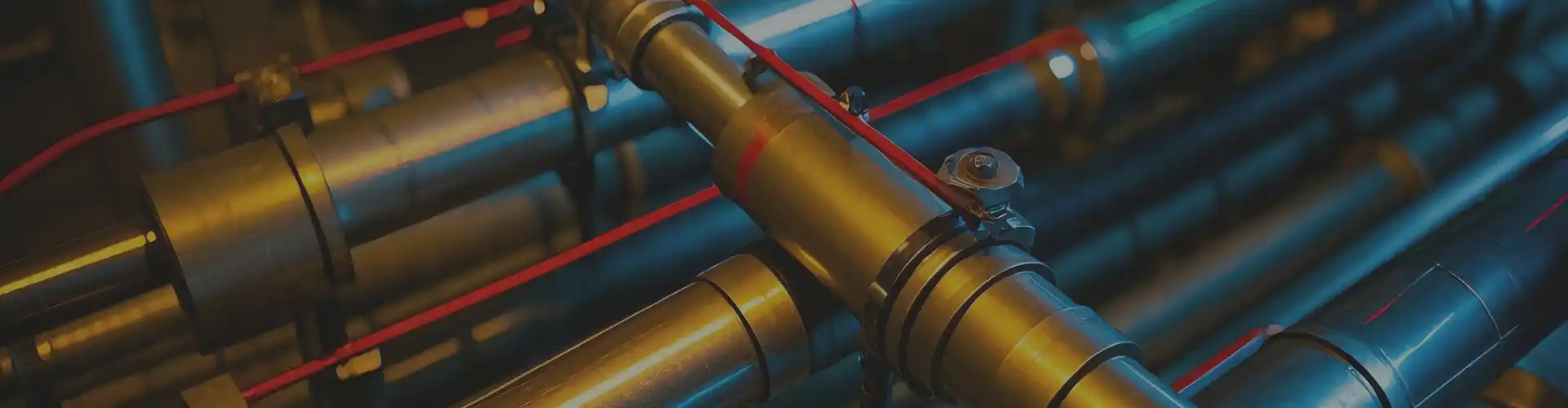
What is Industrial Coating?
Industrial coating refers to the coating applied to industrial equipment, metal structures, floors or other surfaces under demanding service conditions. It is not mainly for decoration but for protective or functional purposes. Industrial coatings are usually formulated to resist corrosion, abrasion or extreme chemical conditions.
With the increasing requirements of low VOC emissions, water-based industrial coatings are popular. Depending on the substrate and service environment, you should use different binders, pigments, fillers and additives to achieve stable performance.
Solutions for Industrial Coating Formulations
Celotech Ruico is a specialized coating additive supplier, providing industrial coating additives and polymer solutions. We can help you solve common issues in different industrial coatings and balance production efficiency with application properties.
| What You May Observe | What You Need | How It Can Be Addressed |
| Uneven coverage or weak adhesion on industrial substrates | Reliable substrate wetting and coating adhesion | We formulate wetting agents to help improve substrate contact and coating uniformity. |
| Pinholes, craters or microbubbles in the coating film | Defect-free film formation | Our defoamers and leveling additives can help reduce surface defects. |
| Pigment settling or inconsistent coating appearance | Stable pigment and filler dispersion | We have various types of dispersants to maintain formulation stability. |
| Reduced coating durability due to film defects | Uniform film formation and coating integrity | We can help you balance binders and additives for improved surface uniformity. |
Recommended Products
We‘ve’ designed a wide range of liquid additives and emulsions for industrial coatings and paints. For guidance on how to select them, you can contact our team for more professional recommendations.

You can choose a silicone-based option if it requires an enhanced surface smoothness. It can provide stronger surface flow and leveling performance.

Suitable for difficult or less-wettable industrial surfaces. It helps the coating establish more uniform contact with the substrate during application.

Offers stronger pigment and filler stabilization in water-based industrial coatings than regular dispersants. You can consider it when formulation stability is the key.
Whether for microfoam, recurring foam, or entrapped air during production, you can find effective solutions with our defoaming and antifoaming technologies.

Different types for you to select from, with consistent film formation and adhesion, as well as a balance of flexibility, hardness and water resistance.
Industrial Coatings Applications
Industrial coatings are widely used on different substrates and in service environments. With the right combination of additives and emulsions, you can improve application efficiency and overall coating finishes.

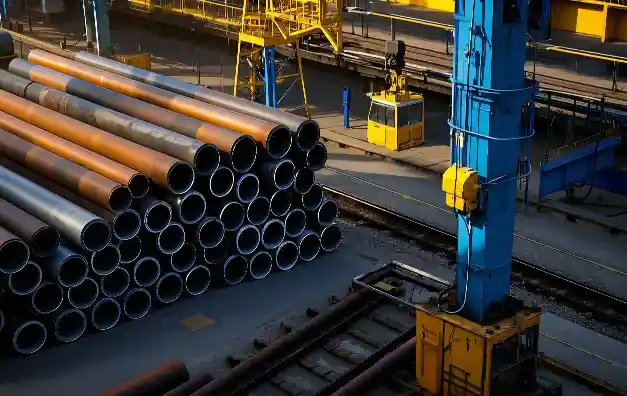
For metal structures, pipelines, tanks, and other surfaces, our wetting agents can improve substrate coverage and adhesion. Acrylic emulsions provide the binder phase for film formation as well as adhesion. Leveling agents can improve film uniformity, helping achieve consistent protection against corrosion, moisture, and chemical exposure.

Our additives can improve application performance in machinery and equipment coating. Whether for industrial facilities, tools, and fabricated components, our additive solutions can help you enhance wetting, flow and leveling. With good management of foam, our defoaming agent can help you get smoother production and applications.

For industrial flooring in workshops, warehouses or basements, the coatings need to withstand frequent traffic, abrasion and chemical exposure. Our acrylic polymer emulsion provides the binder foundation for film formation, adhesion and durability. Combined with our additives, you can achieve formulation stability and coating uniformity.

Our industrial coating additives can work well for road and transportation infrastructure coatings, such as road markings, traffic signs, guardrails, bridges, etc. By improving film uniformity and surface wetting, the traffic coatings can achieve longer-lasting surface performance.

FAQ
Not always. Different industrial coating formulations generally use different binder chemistries, pigments and fillers, so the additives should be adjusted too.
Different application methods such as brush, roller and spray have different flow, foam and leveling requirements, so the additive selection may be affected.
You can check whether these issues exist: pigment settling, incomplete dispersion, formulation incompatibility, or inadequate mixing procedures.
Proper curing can help coatings develop adhesion, hardness, water resistance and durability.
Yes. You can contact us and our team will recommend you rheology modifiers for water-based industrial coating formulations to control viscosity and flow behavior.