This article introduces the use of acrylic emulsion in paints, adhesives, and textiles. It will cover how it enhances product performance, recommended dosages, and some common product pain points. Hope this article can help you acquire the knowledge you are seeking.
What Is Acrylic Emulsion?
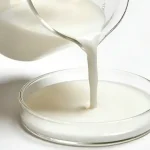
Acrylic emulsion is currently a mainstream, eco-friendly additive for water-based coatings and adhesives; it is formed by copolymerizing pure acrylate monomers and is characterized by small particle size, versatility, and excellent performance.
Based on monomer composition, acrylic emulsions can be further classified into pure acrylic emulsions, styrene-acrylic emulsions, and vinyl acetate-acrylic emulsions.

How Acrylic Emulsion Works
The working mechanism of acrylic emulsion is a process of “water evaporation → particles approach coalescing into a film → formation of a continuous polymer network” to build a flexible, reinforcing framework, thus providing simultaneous enhanced adhesion, crack resistance and toughness, and a waterproof barrier.
Key Benefits
- Rapid film formation upon drying
- Excellent adhesion
- Excellent weather resistance
- Low VOC, non-irritating, and eco-friendly.
The application of acrylic emulsion in Paints & Coatings, Adhesives and textiles
Paints and Coatings
Application Segmentation
Acrylic emulsion is one of the most important film-forming resins in building coatings. It is widely used in interior and exterior latex paints, waterproof coatings, real stone paints, and some industrial coating systems.
Its main function is to firmly bond pigments and fillers to the substrate surface while also imparting water, weather, and scrub resistance to the coating.
Application Process
During the production process, first, titanium dioxide, calcium carbonate and other pigment fillers are rapidly dispersed with a dispersant to prepare the pigment slurry.
Then, acrylic emulsion and related additives are added for color mixing to obtain the finished coating.
During the application process, the coating is applied to the substrate surface by methods such as brushing, rolling, or spraying.
Process Flow:
Dispersion of pigment → Mixing of paint → Construction → Drying and curing
Application Notes
In the coating system, you need to pay particular attention to the emulsion’s glass transition temperature (Tg) and minimum film-forming temperature (MFFT).
Excessively low application temperatures can compromise the quality of the paint film, while excessive pigment and filler loading may reduce water resistance and durability.
Therefore, the formulation design must balance application properties with end-use performance.
Recommended dosage for acrylic emulsion: 10%–40% of total formulation (as binder or co-binder).

Adhesive
Application Segmentation
In products such as pressure-sensitive adhesives, self-adhesive labels, tapes and protective films, acrylic emulsion is usually the main adhesive component.
Due to its excellent transparency, aging resistance and adhesive properties, it is widely used in the packaging, electronics and daily goods industries.
Application Process
During the production process, the emulsion is mixed with components such as tackifying resins, wetting agents, and crosslinking agents to prepare a gel solution.
It is then evenly coated onto the surface of PET film, BOPP film, or release paper using coating equipment. After drying, a gel layer forms, and subsequent processes, such as rewinding and cutting, are carried out.
Process Flow:
Apply adhesive → Apply coating → Dry → Roll back and cut
Application Notes
The most crucial aspect in the application of adhesives is the balance among initial adhesion, peel strength, and holding power.
Be aware that if the Tg (glass transition temperature) of the emulsion is too high, it will affect initial adhesion performance.
If it is too low, it is prone to cause residual glue. Moreover, the amount of coating and drying conditions will directly affect the final quality of the product.
Recommended dosage for acrylic emulsion: 30%–70% of total solids (depending on tack/strength requirements).
Textile
Application Segmentation
Acrylic emulsion is primarily used in the textile industry for applications such as pigment-printing adhesives, nonwoven fabric binders, and fabric-finishing agents.
Among them, pigment printing and nonwoven fabric production are the most common application areas.
Application Process
During the pigment printing process, the emulsion is mixed with color paste, thickening agent, and other components to form printing slurry.
This slurry is then applied to the fabric surface using printing equipment, and the fabric is dried and baked to achieve fixation.
In the production of nonwoven fabric, the emulsion is evenly distributed between the fibers by immersion or spraying, and then the fabric is heat-treated.
Process Flow:
Mixing → Embroidery or Dip Printing → Drying → Firing → Finished Product
Application Notes
Textile applications not only require excellent bonding performance but also require consideration of fabric feel, wash fastness and environmental protection requirements.
Improper control of baking temperature and time can affect the fastness of your products, while excessive cross-linking may make the fabric feel harder.
Recommended dosage for acrylic emulsion: 10%–40% add-on (depending on hand feel, durability, and process requirements).

Key Factors That Affect Acrylic Emulsion Performance
Ten common factors influence the performance of acrylic emulsions; given the number of variables involved, a comprehensive approach is required when selecting the right emulsion for your application.
| Key Factor | Impact on Performance | Why It Matters |
| Monomer Composition | Sets base performance | Governs hardness, flexibility and durability |
| Glass Transition Temperature (Tg) | Governs film forming | Balances hard and flexible textures |
| Particle Size & Distribution | Shapes finished film quality | Boosts gloss and evenness |
| Solid Content | Changes the application efficiency | Boosts coverage and working output |
| Crosslinking Density | Defines long-term endurance | Strengthens water and chemical resistance |
| Functional Monomers | Delivers customized traits | Improves adhesion and tailored performance |
| Emulsifier System | Controls emulsion stability | Stops separation and coagulation |
| Polymerization Process | Decides batch quality consistency | Keeps uniform performance across batches |
| pH Value | Alters system stability | Maintains balanced emulsion condition |
| Storage Stability | Determines usable shelf life | Minimizes settling and viscosity shifts |
Common Problems and Troubleshooting
| Problem | Possible Causes | Recommended Solutions |
| Whitening | High water absorption, poor film formation | Improve water resistance and cross-linking |
| Poor Adhesion | Poor substrate compatibility | Select a suitable emulsion |
| Cracking | Excessive Tg, insufficient flexibility | Use a low-Tg emulsion |
| Poor film formation | Excessive MFFT | Optimize film-forming conditions |
| Poor water resistance | Insufficient cross-linking | Use a highly water-resistant emulsion |
| Poor weather resistance | Low emulsion grade | Use a pure acrylic system |
| Foaming | Inadequate defoaming system | Optimize the defoamer |
| Abnormal viscosity | Incompatible thickener | Adjust the rheology system |
| Delamination/Settling | Insufficient stability | Optimize the dispersion system |
| Insufficient bonding strength | Poor formulation design | Optimize emulsion selection |
Frequently Asked Questions
Compared with Solvent-Based Resins, What Are The Advantages of Acrylic Emulsions?
Compared with solvent-based resins, acrylic emulsions use water as the medium, making them more environmentally friendly, less odoriferous, safer, and less costly.
A Simple Way to Increase the Viscosity of the Acrylic Emulsion System.
- The simplest method is to add a special thickening agent.
- Choose a smaller particle size of the emulsion.
- Appropriately increase the solid content of the acrylic emulsion.
- The thickening effect of a weakly alkaline acrylic emulsion will be better, so the pH can be adjusted appropriately.
What Does Acrylic Emulsion Consist of?
Common components include acrylic monomers, water, surfactants, and initiators.
Is a Higher Solids Content in Acrylic Emulsions Necessarily Better?
Not necessarily. Sometimes, a high solids content can make application more difficult; it depends on how you formulate the system.
Can Acrylic Emulsions Produce Transparent Coatings?
Some can, but not all grades are suitable for this purpose.
Is Using a More Expensive Acrylic Emulsion Necessarily Better?
Not necessarily; sometimes it is simply a matter of the product being “more suitable” for your needs, rather than just being more expensive.
Conclusion
Acrylic emulsions serve as “versatile base materials”—eco-friendly, practical, and essential across a wide range of industries.
CelotechRuico’s acrylic emulsion manufacturer delivers outstanding weather, water, flexibility, and alkali resistance for your products. Contact us for professional technical support and formulation solutions.