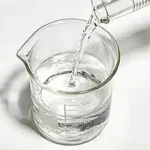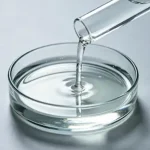
Water-based paints are more prone to fisheye defects because the water-based system usually has a higher surface tension, which imposes higher requirements on the cleanliness of the substrate surface and the compatibility of the formulation. To prevent fish-eye defects in the water-based paints you produce, you can learn about the relevant methods from this article.

Why Do Water-Based Paints Easily Form Fisheye?
Fisheye defects typically occur when surface tension is unevenly distributed during the formation of the coating film. Contaminants such as oil, wax, or silicone oil on the substrate surface cause localized variations in surface tension, preventing the coating from spreading uniformly and resulting in localized shrinkage.
In our daily work environments, it is difficult to completely avoid such contamination during application. Therefore, before applying or spraying paint, the substrate should be properly cleaned, and the fisheye resistance of your paint should also be improved. Only by combining both approaches can fisheye problems be effectively solved.
How to solve the problem of fisheye caused by unclean substrate?
This issue is actually an uncontrollable factor for your paint production and sales. After all, you cannot ensure that the customers who purchase your paint will perform standard cleaning on the substrate. Therefore, we suggest that you write the following usage precautions on the product packaging:
- Before construction, ensure that the substrate and the spray gun are clean, with no oil stains, dust, etc.
- If you need a thick coat of paint, apply a thin layer first, let it dry, then apply the thick coat.
- If the previous steps are not done properly and you encounter fisheye patterns, use fine sandpaper to polish the affected area, then clean it, and apply several thin coats until it matches the original paint surface. (Thin coating requires each layer to dry completely before proceeding to the next layer.)
The above precautions are merely general recommendations based on common experience. For different types of paints (such as those applied by brushing or spraying), there are slight differences in the precautions. Please pay attention to the distinctions based on your product’s application method.
How to adjust the overall formula to eliminate the fisheye defects in water-based paint?
When you are thinking about how to solve the fisheye problem, do you immediately think of adding special anti-fisheye agents? However, in actual production experience, fish eyes are often not caused by the deficiency of a single additive but rather by a mismatch within the entire coating system.
To improve the anti-fisheye performance of water-based paint, several aspects need to be paid attention to simultaneously.
Optimize the Compatibility Among Resins, Pigments, and Additives
Water-based paint is a complex system composed of resins, pigments, fillers, water, and various additives.
If the compatibility between different raw materials is poor, for example:
- Insufficient compatibility between resin and additives.
- Poor wetting effect of pigments or fillers.
- Interference between additives.
These will cause uneven surface tension on the paint film during drying, resulting in local contraction and ultimately forming fish eyes.
Therefore, when adjusting the formulation, it is necessary to first confirm compatibility among the basic materials, rather than simply adding a specific additive.

Establish a Rational Wetting and Stabilization System
For water-based paint, a good paint dispersion state is an important foundation for reducing fisheye.
Reasonable use of paint wetting agents can help distribute pigments and fillers more evenly within the resin system, reducing paint film defects caused by local non-uniformity.
Balance the Use of Leveling Agents and Defoamers
Paint leveling agents can improve the spreading of the paint film, while defoamers mainly address bubble problems during production and construction.
- However, these two types of additives need to be balanced:
- Insufficient leveling agents lead to an uneven surface and pinholes.
- Excessive leveling agents may affect recoating and adhesion performance.
- Insufficient defoamers, leading to pinholes.
- Excessive defoamers may affect wetting and leveling.
Add Anti-fisheye Agents According to Product Requirements
For ordinary water-based architectural coatings, optimizing the basic formulation usually can reduce the risk of fisheye.
However, for water-based industrial paints, high-gloss paints, and automotive paints, which have higher appearance requirements and operate in more complex construction environments, it is recommended to add paint anti-fisheye agents to improve the paint film’s adaptability to minor pollution and construction changes.

Reference Guide for Anti-fisheye Additive Combinations In Water-based Paints
| Water-Based Paints Application | Formula and Dosage (wt% of Total Formula) |
| Architectural Paints | Wetting agent: 0.1–0.5% Defoamer: 0.1–0.5% Leveling agent: 0.1–0.3% |
| Industrial Coatings | Wetting agent: 0.2–0.8% Defoamer: 0.1–0.5% Leveling agent: 0.1–0.5% Anti-fisheye additive: 0.2–1.0% |
| Wood Coatings | Wetting agent: 0.2–0.6% Low-foam defoamer: 0.1–0.5% Leveling agent: 0.2–0.8%Anti-fisheye additive: 0.2–1.0% |
| High-Gloss Coatings | Wetting agent: 0.2–0.8% Low-foam defoamer: 0.1–0.3% |
Note: The dosages in the formulas above represent a general range; specific dosages vary depending on the paint application and are provided for reference only.
FAQ
Which Water-Based Paints Are More Sensitive to Fisheye Defects?
- High-gloss coatings
- Industrial coatings
- Wood coatings
- Decorative coatings
water-based Epoxy Paint or Water-based Acrylic Paint?
Under identical application conditions, water-based epoxy systems are more sensitive to oil and silicone contamination as well as additive compatibility; compared to water-based acrylic paints, they are more prone to “fisheye” defects, making production control significantly more challenging.
Will Thickeners Affect the Paint Fisheye Problem?
Thickeners mainly affect the rheological and film-forming properties. Although they are not the primary cause of fish eyes, improper rheological control may exacerbate surface defects.
Is There Any Relationship Between the Fisheye Phenomenon and the Viscosity of the Paint?
The fish-eye phenomenon is mainly related to surface tension. However, if the viscosity is too high or too low, it may impair leveling, making defects more pronounced.
How Can One Determine Whether the Fisheye Effect Is a Problem Caused By Contamination or a Formulation Issue?
The cause can be gradually identified by inspecting the production equipment, raw materials, additive compatibility and wetting performance.
Can Paint Additives Completely Prevent Fisheye?
The additives cannot guarantee the complete elimination of fish eyes, but the proper addition of auxiliary agents can significantly reduce the probability of defects and enhance the stability of the coating film.
What Special Precautions Should Be Taken Regarding Fisheye in Epoxy Coatings?
Compared to standard paints, epoxy coatings require greater attention to substrate degreasing and cleaning, the prevention of silicone contamination, precise control of the resin-to-hardener ratio, and the selection of highly compatible additives, as epoxy systems are particularly sensitive to changes in surface tension and formulation compatibility.

Final Thoughts
The methods for preventing fisheye defects in your paint products have been outlined above. If you have further questions, please contact Celotech Ruico for a detailed explanation.
Celotech Ruico offers one-stop paint formulation solutions that resolve fish-eye issues and other challenges, thereby enhancing both your product quality and market competitiveness.