Introduction
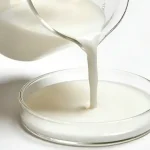
Water-based systems have become the mainstream choice instead of solvent-based coatings due to VOC emission restrictions. Acrylic emulsion clear gloss is a waterborne protective coating with high transparency and gloss in various applications. This article can help you understand the working principles and how to evaluate and maximize their performance.
Acrylic Emulsion Clear Gloss Definition
When you search for acrylic emulsion clear gloss, we know you are not only looking for a single raw material. Actually, you need a functional coating outcome.
In simple terms:
- Acrylic emulsion= water-based polymer dispersion system
- Clear gloss = transparent, high-shine protective film
In conclusion, acrylic emulsion clear gloss means a waterborne acrylic coating system with a transparent and glossy film after drying.
The working principle of solvent-based varnishes relies on solvent evaporation. Instead, acrylic emulsions depend on particle coalescence and polymer film formation. So the final coating performance is not determined by the acrylic emulsion itself, but by how the entire formulation system is designed.
Now you can understand that formulation design is more important than raw material selection. Even with similar solids content, the two emulsions can have distinctions in performance. This is because polymer structure, additive selection, and processing conditions all influence gloss, transparency, and durability.
 Why You Need Water-Based Clear Gloss Systems
In the modern coating industry, the European Union, the United States, China, and other regions are continuously tightening VOC emission limits. In many architectural and industrial coating applications, VOCs are often limited below 100 g/L. Solvent-based clear coats are gradually being phased out, and you may already find their common issues:
- Strong odor during application and curing
- Yellowing under long-term UV exposure
- Flammability and handling safety concerns
- Increasing compliance and environmental costs
Water-based acrylic emulsion systems are becoming a practical alternative due to their eco-friendly properties. They can also help you maintain acceptable and mechanical performance.
However, it is not simply a replacement of the coating type. Moreover, you need to redesign a film-forming system.
Characteristics & Functions of Acrylic Emulsion Clear Gloss Coatings
Then let’s learn about the key characteristics and the functions that the acrylic emulsion clear gloss system provides in a coating formulation.
High Transparency and Gloss Development
The ability to form a transparent and smooth film is the primary characteristic of an acrylic emulsion clear gloss system. After proper film formation, it enables the coating to maintain its original color and texture, but with gloss.
Protective Film Formation
After the acrylic emulsion dried, the polymer film became a multifunctional protective barrier. Depending on formulation design, this film can help you improve:
- Moisture resistance
- Surface durability
- Weathering resistance
- Resistance to environmental exposure
Waterborne & Environmental Friendliness
Acrylic emulsion clear gloss coating is a water-based system, containing lower VOC levels than solvent-based ones. You can meet local environmental regulations without sacrificing production and application efficiency.
Formulation Flexibility
You can benefit from the adaptability of acrylic emulsion. With different acrylic polymer designs such as pure acrylic or styrene acrylic emulsions, and functional additives, you can get different performance on gloss, hardness, flexibility, etc.
Clear Gloss Film Formation Mechanism
To achieve optimal performance for acrylic emulsion clear gloss, you should understand how the film forms. When applying acrylic emulsion, you are actually working with dispersed polymer particles in water. During drying, the acrylic system goes through the following stages:
- Water evaporation
- Particle packing
- Particle coalescence into a continuous film
Film is formed in the last stage when polymer particles fuse into a uniform transparent layer. You should value this process, otherwise you may encounter issues such as haze, low gloss, and micro-cracking if it is incomplete.
The parameter of Minimum Film Formation Temperature (MFFT) is essential in practical formulation. If the ambient temperature is lower than MFFT, polymer particles cannot fully coalesce. It will result in poor film integrity and reduced gloss. You can use coalescent agents to reduce MFFT temporarily and help proper film formation under real conditions.
To control film quality, you should pay attention to the following two technical factors:
1. Glass Transition Temperature (Tg)
Tg determines the flexibility of the polymer:
Low Tg: better coalescence, softer film.
High Tg: higher hardness, better scratch resistance.
2. Particle Size Distribution
Smaller and uniform particles can improve packing efficiency and reduce light scattering. Thus, they can enhance the coating’s transparency and gloss.
In real industrial production, many coating defects are not led by resin chemistry alone. Your problems may be caused by an improper balance between Tg, MFFT, drying conditions, and additive selection.
How to Evaluate an Acrylic Emulsion Clear Gloss System
When evaluating acrylic emulsion clear gloss paints, you should pay close attention to the coating performance. A high-performance clear acrylic emulsion should be a balanced system with clarity, durability, and environmental resistance.
You can check the table to evaluate the performance quickly:
| Performance Property | Expected Behavior | Why It Matters |
| Gloss retention | Stable high gloss over time | Affects long-term appearance |
| Transparency | No haze or whitening | Critical for aesthetic quality |
| Water resistance | No swelling or clouding | Ensures durability in humid conditions |
| UV resistance | No yellowing after exposure | Determines outdoor lifespan |
| Scratch resistance | Surface durability under abrasion | Affects industrial usability |
In accelerated UV testing (ASTM G154 conditions), poorly stabilized acrylic systems will suffer from gloss reduction of 20–40% within 500–1000 hours. It indicates that long-term performance should not be judged from initial appearance. You should always focus on formulation stability.
In real assessments, you can find signs of coating degradation from gloss retention. The water and UV resistance determine long-term service life. All these properties are determined by formulation design rather than any single raw material.
How You Can Improve Performance in Real Formulation Work
If you want to achieve the best performance result with acrylic emulsion clear gloss, you need to adjust all the components instead of the resin alone:
- Resin design: balancing hardness and flexibility
- Crosslinking systems: improving chemical and water resistance
- Leveling agents: increasing surface smoothness and gloss uniformity
- Wax additives: enhancing scratch and abrasion resistance
- Defoamers: preventing and eliminating micro-foam
In practical formulation work, you should understand that these additives do not work independently. For example, wax additives can significantly improve scratch resistance. But if you add an excessive dosage, it may reduce intercoat adhesion. You also need to choose a suitable paint defoamer to avoid surface defects such as craters or fish-eyes. What’s worse, even small amounts of entrapped air (less than 1% volume fraction) will affect the final gloss. Now you can understand that gloss is not only a chemical property but also an optical quality control result.
Therefore, if you want to get a successful formulation, you need to keep the system balanced with all the components.
 Applications of Acrylic Emulsion Clear Gloss Systems
In our lives, you can find acrylic emulsion clear gloss coatings are widely used for appearance or protection purposes.
In wood coatings, they can preserve natural texture while providing transparent protection. In architectural coatings, they are used for decorative and washable wall finishes. In industrial applications, they function as protective topcoats for metal and plastic substrates.
We can summarize the typical applications as follows:
- Interior and exterior wood finishing systems
- Architectural decorative coatings
- Metal surface protection layers
- Plastic surface finishing systems
- Light industrial protective coatings
For the above applications, you can choose acrylic emulsion clear gloss systems if you need environmental and cost-effective solutions.
Practical Insight: What Actually Makes or Breaks Performance
In real production environments, your process conditions will also affect the final performance. You need to pay attention to:
- Drying temperature and humidity
- Wet film thickness control
- Substrate porosity and absorption
- Application method (spray, roller, brush)
For instance, if the production is under very humid circumstances, water evaporation and particle coalescence of the acrylic emulsion will be affected. Haze, reduced gloss, or incomplete film formation will occur then. Conversely, overly fast drying may prevent proper leveling and result in surface defects.
We suggest that you select an application-oriented supplier to work with your real production conditions, ensuring your stable industrial scale-up.
Market Trend: Why Acrylic Emulsion Systems Continue to Grow
According to industry research reports, the global waterborne coatings demand will grow at approximately 5–6% CAGR over the next decade.
Acrylic emulsions remain one of the most widely used platforms due to:
- Cost-effectiveness
- High formulation flexibility
- Balanced performance profile
- Compatibility with a wide range of additives
This makes them a preferred foundation for clear gloss coating systems across multiple industries.
FAQ
Is Acrylic Emulsion Clear Gloss Better for Indoor or Outdoor Applications?
Acrylic Emulsion Clear Gloss can be used both for indoor and outdoor applications. It usually depends on the acrylic polymer type.
What Is The Difference Between Pure Acrylic and Styrene Acrylic Emulsion?
Pure acrylic emulsions have strong weather resistance and UV stability. So we usually use it for exterior applications. Styrene acrylic systems have higher hardness, good adhesion, and cost-effectiveness.
Why Does My Acrylic Emulsion Clear Coating Become Hazy?
There are many reasons that can lead to hazy issues. You can check whether the film is formed incompletely, or the particle is coalesced well. You also pay attention to the compatibility of additives and the drying conditions.
What Is The Recommended MFFT For Acrylic Emulsion Clear Gloss Applications?
In a normal situation, the MFFT should be lower than the expected application temperature to ensure proper film formation. For the specific MFFT, it depends on your application environment and drying conditions.
Can I Use Acrylic Emulsion Alone Without Additional Additives?
For budget-limited projects, you can make appropriate choices depending on your application requirements. But for high-demanding applications, the additives are of high necessity.
 Final Thoughts
Acrylic emulsion clear gloss is an eco-friendly system and aligns with the current market trend. You need to balance the whole formulation to maximize its performance in different application conditions. Celotech Ruico offers acrylic emulsions and functional additives designed for high-performance clear coating solutions, along with job site technical support.