Introduction
Emulsions have vital applications in coating, adhesives, and construction materials. In practical formulation, you‘ll often face demulsification affecting the final performance. Understanding how emulsions form and break can help you control system stability better. We’ll also share some formulation experiences on acrylic emulsion, styrene acrylic emulsion, and SRB latex systems.
What is Emulsion
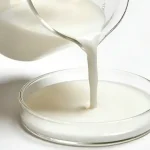
An emulsion is a milky white or translucent and possesses a certain degree of fluidity. It is a dispersed system mixed with two immiscible liquids. One of the liquids becomes countless tiny droplets, dispersing evenly into another liquid. Emulsions are thermodynamically unstable, but kinetically relatively stable. With the help of emulsifiers, additional modifiers, and functional agents, the emulsions are not easily separated. The emulsions are widely used in diverse applications mainly because of their excellent film-forming and binding properties.
 How Emulsions Form
As we know, liquids like oil and water are incompatible, and oil will float on the water’s surface. And they will separate automatically and cannot be mixed evenly. Let’s explain how emulsions form in an easy-to-understand way below:
Prepare the Base Medium
First, the addition sequence is important. We suggest you add water to the reactor, followed by emulsifiers and some auxiliary additives. The emulsifiers just like a combination of a protective sleeve and stabilizing glue. One side is hydrophilic, which means water-loving. The other side is lipophilic, which is oil-grabbing. That’s why the emulsifiers can prevent the oil from clumping back together.
Sometimes, you can also incorporate the following additives for a better effect.
- Add some buffering agents to control pH
- Mix small amounts of stabilizers to prevent later clumping
Add Core Materials
Slowly add oil-based substances, such as Monomers (acrylates, styrene, etc.) or resin precursors. After this step, oil and water will separate into distinct layers since they are naturally incompatible.
Crucial Breakdown Step
Due to the above incompatibility, the oil phase liquid must be destroyed through high shear stirring, shearing, or grinding. Large oil droplets are “torn apart”, and they break down into increasingly smaller droplets. They shrink from “rice-grain size” to “micron or even nano-scale”, which cannot be observed with our naked eye.
For easy conception, this step is just like beating the oil into “milky micro-particles” suspended in the water.
Key Stability Procedure
As the oil droplets shrink, emulsifiers automatically migrate to the interface and perform three functions:
- Coat the surface of the oil droplets just like a protective film
- Lower surface tension to prevent re-aggregation
- Create electrostatic or steric hindrance, causing them to repel each other)
With the cooperative working of emulsifiers, the tiny oil droplets will not merge back together.
From the above four steps, you can understand the formation of an emulsion, or what we call emulsification. Water acts as the continuous phase, like the surrounding medium, and the tiny oil particles function as the dispersed phase, which floats inside.
How Emulsions Break
In real formulation, you may encounter emulsion-breaking issues, mainly reflected in:
- The upper layer becomes oily/resinous
- The lower layer turns clear or settles
- Viscosity suddenly drops or thins
- Floc-like substances/particles appear
- Coating shows separation, clumping
Actually, emulsion breaking is not essentially a case of “sudden failure”. Instead, it is a progressive process involving a loss of stability, followed by aggregation, and finally phase separation.
You can understand the emulsion breaking process by three stages: stable state → loss of stability (onset of adhesion) → complete coalescence (phase separation).
Weaken The System Stability
The first step of demulsification is not phase separation, but rather the point where the droplets begin to approach one another. The approach may be caused by
Influx of Salts/Electrolytes
Substances such as CaCl₂ and NaCl, or ions found in hard water, will compress the electrical double layer. It will weaken the surface charge of the particles, reducing the repulsive forces.
Temperature Fluctuations
If the temperature is too high, it will influence the strength of emulsifier films. If the temperature is too low, the colloid in the system becomes brittle. So the temperature changes will be harmful to this protective film.
PH Changes
Excessive acidity causes the emulsifier to become protonated, while excessive alkalinity can lead to the hydrolysis of certain protective layers. An unsuitable pH level effectively causes the emulsion to lose part of its protective coat.
Flocculation
This is a critical intermediate stage of demulsification. Although the particles have not yet truly merged, they have transitioned from a state of individual dispersion to loose aggregation. At this point, particles begin to form clusters that can still be dispersed by gentle agitation. You may find that viscosity fluctuates, and a slight tendency toward phase separation may appear.
This occurs because, once the electrical charge is weakened, the attractive forces between particles exceed the repulsive forces. However, the protective film has not yet fully ruptured. In fact, many emulsion issues stall at this stage.
True Demulsification (Coalescence)
This is an irreversible stage. The protective film is breached, and two droplets get very close, so the emulsifier layer is displaced, and the film ruptures. Small droplets merge into larger ones, leading to a sharp reduction in surface area and a decrease in the system’s energy. Large particles either rise to the surface (in the case of oil) or settle at the bottom (in the case of resins or fillers), resulting in phase separation.

How to Stabilize Emulsions
After understanding how emulsions form and break, you can stabilize them much better. Each emulsion system has different stability requirements depending on formulation conditions such as pH, electrolyte level, and cement interaction.
In practical formulation work, stability is not achieved by a single additive, but by balancing several functional components in the system.
Control the Dispersion System
The droplets will not easily collide if you can make the system stable and slow-moving. The first step is to ensure the emulsion is properly dispersed and protected during storage and processing. You can achieve it by:
- Using protective colloids (such as cellulose ethers like HPMC, HEC, MHEC)
- Adjusting viscosity to slow down droplet movement
- Preventing early flocculation during storage
Maintain Electrolyte and PH Compatibility
Many emulsion systems are sensitive to ionic environments, especially in construction applications. Therefore, to improve stability, you need to:
- Avoid excessive salts or high-electrolyte raw materials
- Control pH within a suitable range for the polymer system
- Pay special attention to cement-based systems, where Ca²⁺ can destabilize emulsions
Optimize Interfacial Protection
At the droplet level, stability depends on a strong and flexible interfacial layer. You are supposed to build a flexible and strong interface film to resist coalescence under stress. You need to pay attention to:
- Proper surfactant selection (for emulsification and droplet formation)
- Using polymeric stabilizers to reinforce the interface
- Ensuring compatibility between emulsifiers and thickening systems
Balance Rheology without Over-Thickening
What’s more, you also need to keep the viscosity in proper grades. If the viscosity is too low, the droplets will move easily and collide. If the viscosity is too high, it will cause poor dispersion and mixing difficulty. You need to use suitable cellulose ethers or thickeners to adjust rheology.
System-Specific Stabilization Strategy
The above emulsion stability mechanisms are for general purposes. In industrial applications, emulsions can be classified in many ways based on structure, composition, and application. From a structural point of view, they include oil-in-water and water-in-oil systems. From a performance perspective, emulsions can also be designed as hard or soft, or even core-shell structures.
In coatings, adhesives, and construction materials, the most widely used emulsions are synthetic polymer dispersions as follows. And we will recommend some specific stabilization strategies for your reference:
- Acrylic Emulsions: focus on electrolyte resistance and storage stability
- Styrene-Acrylic Emulsions: balance hardness and compatibility stability
- SBR latex: focus on cement resistance and ionic stability
- VAE emulsions: balance flexibility and water resistance in the mortar system
FAQ
Why Emulsions Break?
Since the formation of an emulsion needs an emulsifier, insufficient or ineffective emulsifiers can be one of the reasons. As we also mentioned the temperature, PH level, and electrostatics in the article, their instability can lead to emulsion break. Additionally, Excessive shear, vigorous mixing, and incompatibility within the formulation system can also be the factors.
Which Cellulose Ether is Best in Emulsions?
HPMC, MHEC, and HEC are all widely used in emulsions. For instance, HEC can provide good compatibility in acrylic systems, and HPMC or MHEC are more commonly chosen for construction mortars.
Why Does My Emulsion Separate After Adding Electrolytes?
In Emulsions, all tiny droplets carry the same electric charge, which makes them push each other. Electrolytes will cancel out this surface charge, causing the droplets to crash into one another and clump up.
Why Does My Emulsion Lose Viscosity Over Time?
Emulsion viscosity drops over time mainly due to the loss of balance. After long-term storage, the particle stability will be affected. If there are incompatible additives or external impurities in the system, the thickening structure will be destroyed.
What Is The Difference Between Flocculation And Coalescence?
Flocculation means tiny droplets clump into loose clusters, but you can separate them again by stirring. Coalescence refers to the condition when oil and water are separated permanently, which is irreversible.
Final Thoughts
Understanding how emulsions form and break is essential for controlling stability for different systems. Proper formulation design ensures reliable performance under complex conditions. Celotech Ruico provides cellulose ethers, thickeners, and formulation support to help improve emulsion stability and system compatibility in coating and construction applications.