Introduction
In construction and coating industries, we also use “SBR” to describe styrene-butadiene latex. Actually, styrene-butadiene rubber and styrene-butadiene rubber latex are two different materials. We will talk about their key differences in properties and performance. You can also understand how to select the right material with some applications and guidance.
What Is Styrene-Butadiene Rubber (SBR)?
Styrene-butadiene rubber, or SBR, is a synthetic elastomer made from styrene and butadiene. It is in a solid form and was created to replace natural rubber. SB rubber has superior abrasion and wear resistance compared to natural rubber and is also lower in cost.
SBR rubber has balanced performance and cost efficiency, so you can find its various applications in industrial production.
What Is Styrene-Butadiene Latex (SBR Latex)?
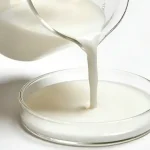
Styrene-butadiene latex is a water-based emulsion. It is developed by polymerization of styrene and butadiene, too. SBR latex is in liquid form and is usually applied in water-based formulations.
SBR latex usually contains around 45–55% solid content, with polymer particles dispersed in water for use.
Key Differences Between SBR Rubber and SBR Latex
Both SB rubber and SB latex are copolymers from the same monomers. However, they have distinctions beyond physical form. You can learn the differences from the following properties and performance.

Physical Form and Processing Method
The physical form between SB rubber and SBR latex is the most fundamental difference. And because of that, their processing methods are also different.
SBR Rubber Requires Compounding and Vulcanization
In a solid form, SBR rubber is usually compounded with other components for the final usable product. Mixing with carbon black, sulfur, accelerators, and processing oils, it can be shaped. After vulcanization, it can create crosslinks between polymer chains, improving strength and elasticity. For example, in manufacturing tires, SBR rubber must first be compounded and cured for good performance.
SBR Latex Enables Direct Formulation Integration
In contrast, SBR latex is a kind of emulsion designed for waterborne systems. The polymer will be dispersed as particles suspended in water. So you can directly mix SBR latex with cement, fillers, pigments or other formulation components.
During drying, the latex particles gradually merge and form a continuous polymer phase. For instance, in cement-based repair mortar, SBR latex does not need rubber processing equipment and can be added directly during mixing.
Performance Properties
Due to their different structures, SBR rubber and SBR latex can perform differently.
Mechanical Strength and Durability
SBR rubber can provide high mechanical strength. Thus, it is often used as a cured elastomer. After vulcanization, the crosslinked network can enhance the SBR rubber properties. SB rubber can provide excellent tensile strength and abrasion resistance. It also exhibits outstanding elastic recovery and long-term durability. So you can use SBR rubber under repeated mechanical stress.
While SBR latex can also modify the mechanical performance of a formulated system. It works by its polymer film after water evaporation. In cement-based systems, the continuous film can help enhance the material’s toughness and cracking resistance.
Flexibility and Crack Resistance
Styrene butadiene rubber has excellent flexibility because of the butadiene. This component can provide excellent elasticity. It is ideal for rubber products as it can be deformed and recover repeatedly after vulcanization.
But styrene butadiene latex improves flexibility by forming a film after drying. In cementitious materials, SBR latex’s flexibility can help reduce brittleness.
SBR latex improves flexibility after drying through polymer film formation. In construction materials, this flexibility helps reduce brittleness in cement-based systems. In coating systems, SBR latex can improve cracking resistance with its flexibility.
Adhesion Performance
SBR rubber does not have bonding properties, but is mainly used for its mechanical performance. It has good internal strength, but it needs additional formulation steps if you need adhesion with it.
For SBR latex, the latex film it forms can provide excellent adhesion performance. You can use SB latex to improve bonding strength between mortar and substrate. In coating formulations, it can also enhance the adhesion of the coating films.
 Water Resistance
SBR rubber has good inherent water resistance. That is because the styrene-butadiene polymer structure is relatively hydrophobic. With this property, SBR used in rubber products can help resist water.
By comparison, SBR latex emulsion improves water resistance differently. After drying, the polymer film of SBR latex can act as a barrier layer to block water penetration. In waterproofing systems, SBR latex can create a denser polymer-modified structure. You can get good waterproofing performance and durability with styrene butadiene rubber latex.
Why Do SB Rubber and SB Latex Show Different Performance?
From the above comparison, we can find SB rubber and SB latex show different properties, though they are polymerized from the same styrene and butadiene monomers. The differences mainly come from polymer design and physical organization.
The difference mainly comes from polymer design and physical organization. Key factors affecting both SBR rubber and SBR latex include:
- styrene/butadiene ratio
- molecular weight distribution
- glass transition temperature (Tg)
In SBR latex systems, particle size and dispersion stability also influence processing behavior and final film properties. Therefore, SBR latex products with similar solid content may still show different performance.
Application Areas
With their differences in form and performance, styrene-butadiene rubber and styrene-butadiene rubber latex are used in different application scenarios. You can refer to the following uses if you want to choose one from these two materials.
SBR Rubber Applications
SBR rubber is mainly used for products that require solid rubber performance. For the following products, you need to use SBR rubber.
Automotive Tires
With exceptional durability and abrasion resistance, styrene-butadiene rubber (SBR rubber) is widely used in automotive tires.
 Industrial Rubber Products
For conveyor belts, rubber sheets, gaskets, and seals, SBR rubber can provide long-term service performance after curing.
Molded Rubber Components
When elasticity and mechanical stability are required, styrene butadiene rubber is a perfect material to process into various shapes.
SBR Latex Applications
Primarily as a polymer modifier, SBR latex is often applied in water-based systems. You can find that SBR latex is ideal for the applications below:
Construction Materials
Due to its excellent adhesion and flexibility, SBR latex can work very well in tile adhesive, bonding slurry and concrete modification.
Waterproof Coatings
In waterproof coating systems, SBR emulsion can help improve water resistance by polymer modification.
Adhesives and Binders
SBR latex is also used in adhesive systems due to its film formation benefits. The polymer film provides excellent flexibility and strong cohesive strength.
How to Choose Between SBR Rubber and SBR Latex?
For you to know how to choose between SBR rubber and SBR latex for more applications, you can refer to the following selection guidance.
Choose SBR Rubber when you need:
- A solid elastomer material
- Vulcanized rubber performance
- High abrasion resistance
- Mechanical durability under repeated stress
Choose SBR Latex when you need:
- A water-based polymer dispersion
- Easy incorporation into liquid formulations
- Polymer modification of cement, coating, or adhesive systems
- Improved flexibility and bonding performance
When you choose SBR latex, you should evaluate parameters such as solid content, Tg, and viscosity. Additionally, you should also focus on its compatibility with defoamers and thickeners in your formulation system.
The key to selecting SBR rubber or SBR latex is not about polymer chemistry. You should consider how the material will be processed and what performance your final product requires.
 Final Thoughts
Styrene-butadiene rubber and styrene-butadiene latex are not the same materials. SB rubber refers to the solid polymer and is mainly compounded for rubber products. SBR latex is an emulsion and works as a polymer modifier in construction and coating applications. Celotech Ruico supports customization of SBR latex products and formulations. Contact us for details.
FAQ
Why Does SBR Rubber Need Vulcanization?
SBR rubber needs crosslinking to develop elastomer properties.
Does Higher Solid Content Mean Better SBR Latex Performance?
No, the SBR latex performance is related to many parameters, including Tg, particle size, polymer structure, and so on.
Can SBR Latex Be Mixed with Other Polymer Emulsions?
Yes. SBR latex can be mixed with other polymer emulsions to reach complementary performance.
Why Do Some SBR Latex Products Have Different Viscosities At the Same Solid Content?
SBR latex with different particle sizes and stabilize system can affect the viscosity.
What Is The Difference Between SBR Latex and SBR Emulsion?
SBR latex equals SBR emulsion; they refer to the same emulsion type.
How Do I Choose Between SBR Latex and Acrylic Emulsion For Coatings?
If you need excellent UV and weather resistance for your project, you can choose acrylic emulsion. If you need to reduce shrinkage stress and improve bonding, you should choose SBR latex.
Is SBR Latex Resistant To UV Exposure?
SBR latex does not have superior UV resistance and cannot compare with acrylic emulsion when exposed to long-term UV rays.
What Is the Difference Between Low Tg And High Tg SBR Latex?
At the same temperature, SBR latex with low Tg provides better flexibility. High Tg grades of SBR latex usually have higher hardness and strength.