Styrene acrylic emulsion is an important raw material for some modern chemical products such as coatings, adhesives, paper and textile products. The purpose of this article is to show you how styrene-acrylic emulsion is made and the key factors that affect the performance of the product, hoping to help your production development.
What Is Styrene Acrylic Emulsion?
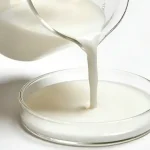
Styrene acrylic emulsion(Phenylpropanoid Emulsion) is a kind of polymer emulsion obtained by copolymerization of styrene and acrylate monomers. It is a common milky-white, water-based emulsion, usually used in water-based chemicals.
- Among them, styrene can provide your products with coating hardness, gloss and excellent water and alkali resistance;
- Acrylate regulates the flexibility, adhesion and aging resistance required by your formula.
Different applications have different requirements for emulsion performance. For example, architectural coatings usually pay more attention to water resistance and weather resistance, while adhesives pay more attention to bond strength and flexibility. Therefore, it is necessary to design the formula according to the use of the product in the production process.

List of Raw Materials for Styrene Acrylic Emulsion Production
Each material has a corresponding function, so the quality of the material is very important to the finished quality of the emulsion.
| Raw Material Category | Common Raw Materials | Function |
| Key Raw Materials | Styrene | Improves hardness, gloss, and water resistance |
| Butyl Acrylate (BA) | Provides flexibility and improves film-forming performance | |
| Acrylic Acid (AA) | Improves emulsion stability and adhesion | |
| Functional Monomer | Methyl Methacrylate (MMA) | Improves hardness and chemical resistance |
| Hydroxyethyl Methacrylate (HEMA) | Provides crosslinking properties | |
| Hydroxyethyl Acrylate (HEA) | Improves adhesion and durability | |
| Emulsifier | Sodium Dodecyl Sulfate (SDS) | Stabilizes latex particles |
| Octylphenol Polyoxyethylene Ether (OP-10) | Controls particle size and improves stability | |
| Anionic/Nonionic Hybrid Emulsifier | Improves stability and water resistance | |
| Initiator | Potassium Persulfate (KPS) | Initiates polymerization reaction |
| Ammonium Persulfate (APS) | Controls the emulsion polymerization process | |
| Dispersion Medium | Deionized Water | Provides the reaction medium for polymerization |
| pH Regulator | Ammonia Solution, Sodium Hydroxide | Adjusts pH and improves storage stability |
| Other Additives | Defoamers, Preservatives, Chain Transfer Agents, etc. | Improve storage performance and production stability |
Note: The raw materials in the table above are only some important ones, and there will be differences in how different materials are applied across different application fields; this is for reference only.
Styrene Acrylic Emulsion Production Process Steps
Compared with ordinary solution polymerization, styrene acrylic emulsion polymerization usually provides better reaction control in water-based systems and yields stable, dispersed polymer particles.
The main production steps are as follows.
Pre-emulsification Stage
Before production starts, styrene, an acrylic monomer, an emulsifier, and water need to be mixed in a specific proportion to form a stable pre-emulsion. Since the styrene and acrylic monomers themselves are insoluble in water, they need to be evenly dispersed in the aqueous phase by emulsification.
Main effects of the pre-emulsification stage:
- Monomer dispersion state
- Subsequent polymerization reaction efficiency
- Final latex particle size distribution
Seed aggregation stage
After pre-emulsification is complete, part of the pre-emulsion is added to the reaction kettle, and the temperature is raised to 80℃, which is suitable for the polymerization reaction. At the same time, the initiator is added to start the reaction.
This stage will form the initial polymer particles. You can think of it as the basic stage of emulsion particle formation. Seed polymerization is well controlled, and the subsequent emulsion structure is usually more stable.
Monomer drop addition stage
After seed formation is completed, the remaining monomer will be continuously added to the reactor at the set rate. This is a very critical step in the production process.
At this time, workers need to pay attention to the feeding speed, reaction temperature, mixing state and reaction time.
These factors will directly affect the viscosity, particle size, stability and final application properties of the emulsion.
Insulation ripening stage
After the main polymerization reaction is completed, it is necessary to continue for a certain period of time to make the remaining monomers fully react. This stage is mainly used for:
- Improve monomer conversion rate
- Reduce the residual monomer content
- Stabilize the emulsion structure
After curing, the emulsion’s performance will be more stable.
Post-processing stage
The final step is quality testing, which requires pH adjustment, filtration, defoaming and performance testing of the emulsion. It also needs to test its solid content(40~50%), viscosity(80~2000mPa·s), pH value(around 8), particle size, freeze-thaw stability, film formation performance and storage stability. See if they all meet the criteria.
The entire production process is a real test of the production plant’s technology and experience.

How the Production Process Affects the Properties Of Styrene Acrylic Emulsion
When you compare styrene acrylic emulsions from different suppliers, you will often find that the final performance may differ even if the raw materials are similar. It’s often these things that go wrong.
Design of Formula
Different applications require different polymer structures. For example, the architectural coatings mentioned above require improved water and weather resistance, while adhesives require better bond performance and flexibility. Therefore, no single styrene acrylic emulsion is suitable for all scenarios.
Control of Aggregation
During emulsion polymerization, temperature, drop acceleration and reaction conditions will affect the polymer structure. These parameters need to be optimized through long-term production experience, so try to find suppliers with sufficient production experience.
Particle Size Control
The particle size of the emulsion will affect the storage stability, film-forming property and coating effect of the final product. Stable particle size control is the basis for ensuring product consistency.
Celotech Ruico Styrene-acrylic Emulsion Solutions

A stable production process can help the emulsion achieve more consistent performance, meeting the needs of different applications.
Celotech Ruico is a high-performance styrene acrylic emulsion manufacturer, providing stable, reliable products to global customers.
With 13 years of industry experience, 50,000 square meters of production facilities, and a comprehensive research and development system, CelotechRuico can provide emulsion solutions tailored to the needs of different applications.
FAQs
Why Does Styrene Acrylic Emulsion Instantly Agglomerate When Added to Cement or Lacquer?
Calcium and magnesium ions in cement can destroy the charge balance of the emulsion. We use a high-calcium-ion emulsion system to provide strong steric protection and effectively prevent caking.
What is the Difference Between Pure Acrylic Emulsion and Styrene Acrylic Emulsion?
Pure Acrylic Emulsion: excellent weather resistance, anti-yellowing, and suitable for exterior wall paint.
Styrene Acrylic Emulsion: high hardness, water and alkali resistance, high cost performance, suitable for interior walls, waterproof, and adhesive.
How Do the Glass Transition Temperature (Tg) and Minimum Film Forming Temperature (MFFT) of Styrene Acrylic Emulsion Affect the Construction?
TG determines the hardness after drying. If the construction environment temperature is lower than MFFT, the emulsion particles cannot fuse, which will lead to coating cracking and powdering.
How Long Is the Shelf Life of Styrene-Acrylic Emulsion, and How Can We Prevent Freezing in Winter?
Sealed and stored at 5 ℃ to 35 ℃ for 6 months. Emulsion freezing will be permanently scrapped. In winter, we will use a constant-temperature container or a professional insulation package for delivery.
How Do You Help Customers Reduce VOC Environmental Indicators?
In the ripening period, adding an efficient REDOX initiator, forced elimination of residual trace-free monomer, source deodorization and easy environmental protection certification.
How to Make Acrylic Polymer Emulsion? Is the Process the Same As the
Styrene Acrylic Emulsion?
Acrylic polymer emulsions are also usually produced by emulsion polymerization process, the overall process is similar to the five production stages of phenyl acrylic emulsion, but because of the lack of styrene, the formulation design and performance control focus will be different.
Which Styrene Acrylic Emulsion Should Be Selected for Interior Wall Coating?
Interior wall coating styrene acrylic emulsion should be selected for good adhesion, water resistance, film-forming performance, and suitable cost performance to ensure smooth construction and stable coating performance.