




Sodium Polyacrylate Dispersant Manufacturer
In water-based systems, a dispersant is far more than just “another additive”; it often determines the ultimate performance ceiling of the entire formulation.The core function of our sodium polyacrylate dispersants is straightforward: to facilitate the separation of pigments and fillers, and—crucially—to ensure they remain separated rather than re-aggregating.
- Shortens grinding time and improves efficiency.
- Effectively reduces viscosity and optimizes application performance.
- Reduces uneven color paste distribution, blooming, and floating color.
- High storage stability; no settling or coarsening.
Sodium Polyacrylate Dispersant Technical Data Sheet
| Appearance | Colorless to yellowish transparent liquid |
| Active Content | 41±1% |
| pH | 7±1(25℃) |
| Lonicity | Anion |

Why Do So Many Clients Choose Us for the Long Term?
When it comes to sodium polyacrylate dispersants, achieving short-term results is not difficult; the true challenge lies in “batch-to-batch stability.” We place particular emphasis on the following details:
High Batch Consistency: Viscosity fluctuations across batches of the same product grade are maintained within a reasonable, controlled range.
Stable Raw Material Sourcing: The supply chain for the monomers and intermediates used in our sodium polyacrylate dispersants is fully traceable.
Authentic and Reproducible Data: There is minimal deviation between our laboratory data and the actual results observed at our clients’ sites.
Product Grade

Highly effective for inorganic pigments, offers excellent versatility, and requires low dosage.
Sodium Polyacrylate Dispersant Core Performance

Quickly adsorbs onto the surfaces of pigments and fillers, forming strong electrostatic forces and spatial steric hindrance, preventing particle agglomeration, shortening grinding time, significantly reducing slurry viscosity, and improving production efficiency.

Compatible with water-based emulsions, various additives, pigments and fillers, without affecting key indicators such as film formation, adhesion, water resistance, and salt spray resistance.

Low VOC, no APEO, low odor, low bubble formation during grinding, minimal defoamer required, ensuring paint film appearance, meeting the requirements of high-end water-based coatings.

With the same dispersion effect, the amount added is lower, improving the formula’s cost performance without increasing additional production costs.
Sodium Polyacrylate Dispersant Applications

Our acrylic sodium salt dispersant is particularly suitable for latex paint systems and provides stable dispersion of titanium dioxide, heavy calcium, and talc. It can effectively reduce common problems such as floating color and blooming.
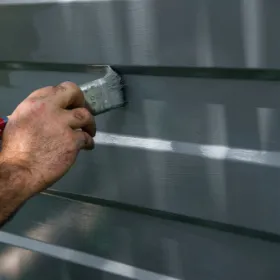
The main applications of the sodium acrylate dispersant include anticorrosive, wood, and plastic coatings. It can improve the gloss and surface smoothness of the coating film, reducing haze and dullness.

Celotech Ruico’s acrylic sodium salt dispersant is well compatible with both organic and inorganic pigment.s. The grinding is faster, the particles are finer, and the color is more stable.
Packaging and Storage
Packaging Specifications: 50 kg/drum, 250 kg/drum, 1250 kg/drum, or customized packaging upon request.
Storage: Store in a cool, dry place, unopened, at a temperature between 5°C and 35°C. The product has a shelf life of 12 months from the date of manufacture.

Testimonial
What we value most are efficiency and workflow pace. The performance of this dispersant during the grinding phase is immediately apparent—viscosity drops faster, and the entire dispersion process is much easier to control. Since switching to it, we’ve reduced the processing time per batch, and our equipment runs more stably; these improvements are clearly perceptible in our day-to-day production operations.
 Mark ThompsonProduction Supervisor, Paint Manufacturing
From a technical perspective, its stability performance is quite satisfactory. The pigments are more evenly dispersed, and the finished product’s color consistency is better. We conducted storage tests, and the system showed no significant stratification or sedimentation over a long period, which is a very important indicator for high-end building coatings.
 Anna MüllerConstruction Coatings Technology Manager
When developing formulations, our primary focus is on material compatibility and the cost of adjustments. This dispersant demonstrates excellent compatibility across various systems, allowing us to achieve the desired results without the need for frequent parameter fine-tuning. For us, this not only saves time but also makes the entire development process much more manageable.
 Ravi PatelFormulation Engineer
Quick FAQs for Sodium Polyacrylate Dispersant :
Yes. Its strong viscosity reduction and dispersion capabilities can be adapted to 60% or higher high-solid content systems, reducing the grinding difficulty and improving the storage stability of the coating.
The product is designed with low foam. During grinding, there is little foam. When conducting high-speed dispersion, it is recommended to combine a small amount of defoamer to further optimize the construction appearance.
Yes, it is. It performs well at reducing viscosity, especially in high-filler systems. However, it is recommended to adjust the dosage slightly according to the desired viscosity.
Our acrylic sodium salt dispersant is inherently low in foam. However, when dispersing at high speed, it is still recommended to use a small amount of defoamer. This is a common feature of all dispersants.
It can improve particle dispersion and workability, but compatibility with high-alkali systems needs to be confirmed.