

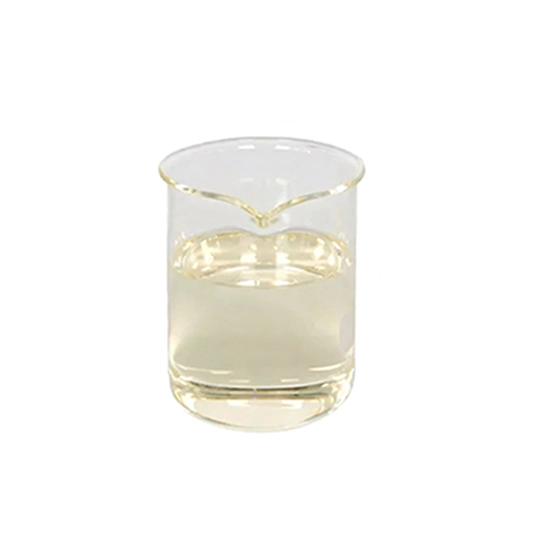



Polyacrylate Dispersant Manufacturer in China
Polyacrylate dispersants are anionic polymeric surfactants that, when added to various water-based coatings, inks, and pigment pastes, can stabilize and uniformly disperse the system while reducing viscosity.
Celotech Ruico offers cost-effective, high-quality polyacrylate dispersants:
- Higher pigment loading.
- Enhanced color development.
- Improved grinding efficiency.
- Improved transparency.
Why We Are Trustworthy
With 14 years of industry experience, Celotech Ruico consistently delivers high-quality, reliable polyacrylate dispersants, maintaining consistent standards for both samples and bulk orders. We provide professional formulation solutions and comprehensive technical support to ensure every finished product meets customer expectations, making cooperation worry-free and secure.
Related Products


Core Benefits of Celotech Ruico Polyacrylate Dispersants

Polyacrylate dispersants, when added to the system, provide long-term resistance to various adverse environmental factors. They are not prone to yellowing or fading under conditions such as strong UV radiation, high humidity, rain, and dust, and exhibit excellent resistance; the film layer is not prone to cracking or blistering.

By adding a small amount of Celotech Ruico dispersing agent to your product, the dispersion efficiency can be significantly improved, reducing raw material loss during the production process and enhancing operational efficiency and cost-effectiveness.
Why Choose Celotech Ruico Polyacrylate Dispersants

Polyacrylate dispersants offer highly efficient dispersion, rapidly wetting and uniformly dispersing pigment or filler particles.

Excellent viscosity reduction allows for increased pigment loading while maintaining formulation stability, optimising formulation structure, and reducing costs.

Exhibiting excellent long-term stability, it maintains uniform pigment particle distribution during storage and use, minimizing the risk of hard sedimentation.

Polyacrylate dispersants offer high compatibility and are widely applicable to various resin systems and different types of pigments and fillers.

In products containing multiple pigments, polyacrylate dispersants effectively improve pigment uniformity, reducing floating and blooming phenomena.

The addition of polyacrylate dispersants does not generate excessive bubbles during high-speed stirring, grinding, or dispersion processes, improving production efficiency.
Advantages of Polyacrylate Dispersant Uses
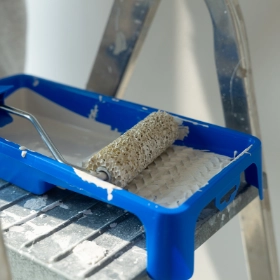
In water-based coatings, polyacrylate dispersants adsorb onto the surface of pigment particles, effectively preventing clumping and sedimentation, allowing for rapid wetting and uniform dispersion of the pigment.
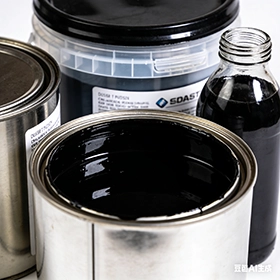
In ink applications, its stable dispersion mechanism significantly improves pigment dispersion efficiency, reduces grinding time and energy consumption, and simultaneously enhances transparency and colorfastness.
Polyacrylate dispersants can enhance the stability and construction performance of the coating agent, making the formed coating surface smoother and more uniform, improving the surface quality, smoothness, and adhesion of the final product, and increasing production efficiency.

In the production of pigment dispersion slurry, polyacrylate dispersants can make the pigment particles reach a finer particle size and maintain a stable distribution, thereby achieving higher pigment loading and lower system viscosity. This meets the requirements of industrial applications for high-concentration and highly stable pigment dispersion slurry.
Packaging and Delivery
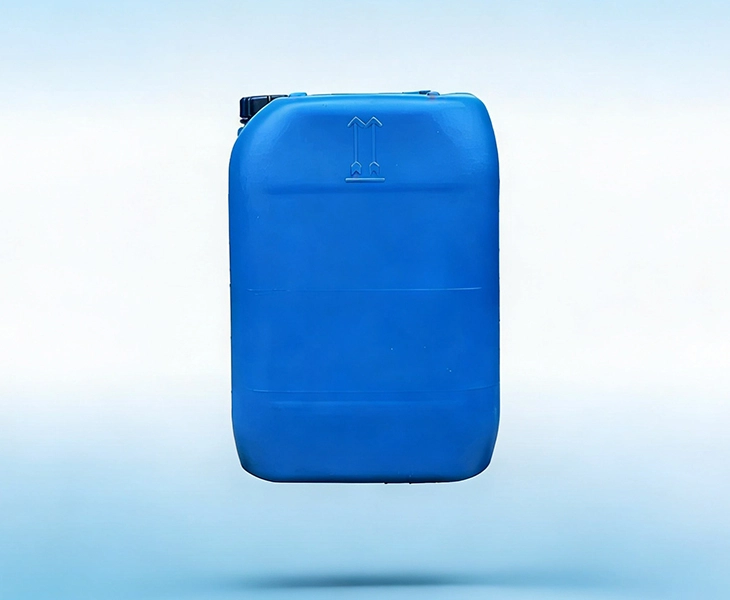
Packaging: Available in 30 kg and 200 kg drums;
Custom packaging is available.
Delivery: Direct from the factory;
Shipping methods include CIF, FOB, DDP, etc.

Testimonial
Celotech Ruico’s formulation solutions were very practical, preventing the mixtures from becoming too thick even at high pigment concentrations. It also made our formulations more flexible. Thank you, I will order again next time!
 Mustafa KayaProduction Manager
These polyacrylate dispersants have really helped us a lot. The pigments are easier to mix, and the viscosity is very stable, making our high-volume production much smoother.
 Chris DavisSenior Coatings Chemist
After using these polyacrylate dispersants, grinding time and energy consumption have both decreased, yaar. Multiple repurchases; the quality of each batch has been consistent, with no unexpected issues. The technicians are always patient in answering any questions that arise during production.
 Vikram SinghOperations Manager
Quick FAQs for Polyacrylate Dispersant Agent:
The quality of a dispersant can be judged by observing whether the particles are uniform, the sedimentation phenomenon, and the change in system viscosity. Uniform particles, no sedimentation, and no change in viscosity generally indicate a good dispersant.
Yes! They can be mixed with defoamers, leveling modifiers, surfactants, etc.
By reducing friction between pigment or filler particles, they accelerate pigment wetting, thus shortening grinding time.
A dispersant is needed when the formulation contains a large amount of pigment or filler to prevent particle agglomeration, sedimentation, or uneven dispersion.